On My Hands
Or Another Knuckle-Gazing (And Retrograde!) Personal Narrative

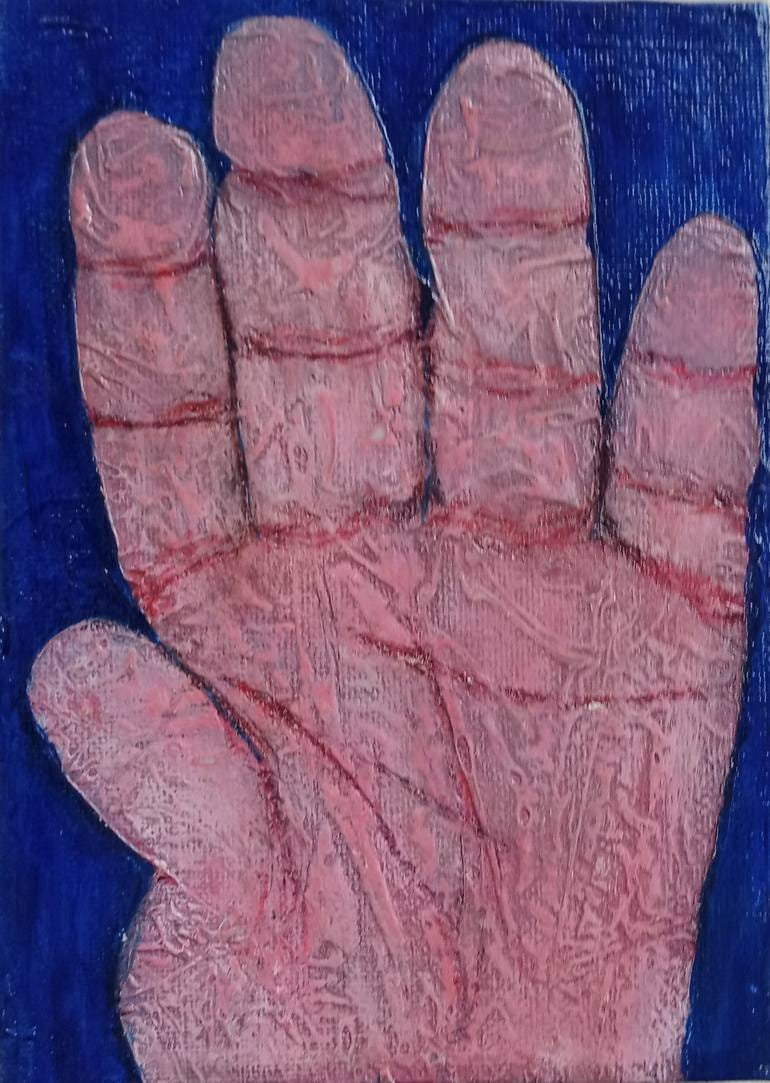
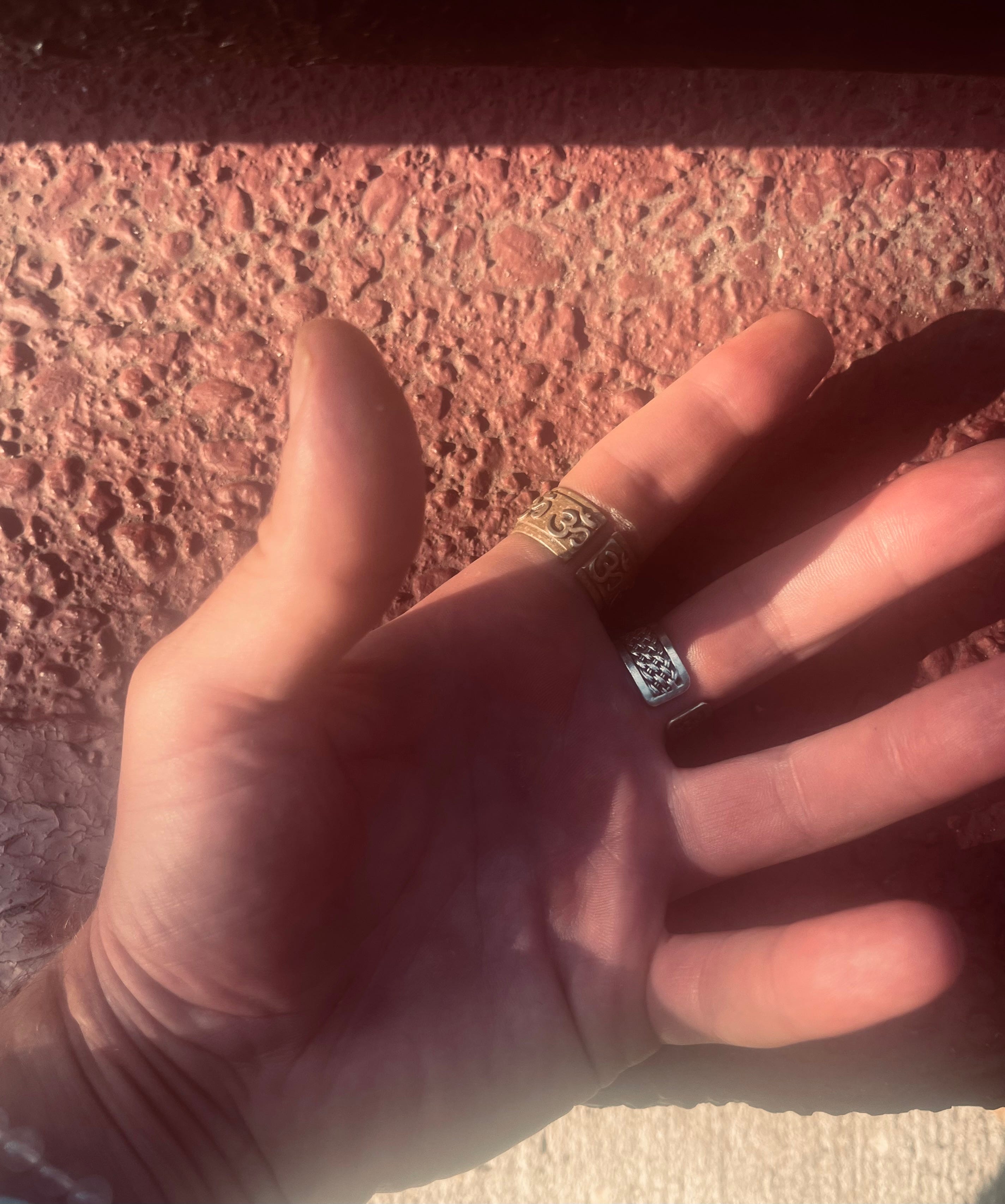
My hands are large, with slightly misshapen fingers, knuckles bulging in such a way that I’m unable to fit rings on any finger save the pinky. Is this a sign? Or so I often wondered before I discovered those adjustable open backed rings—which aren’t exactly elegant.
Rough and inexplicably calloused for an academic failson—whose only occupational hazards are paper cuts and carpal tunnel syndrome—my hands resemble those of my dead maternal grandfather, a child of 1930s Williamsburg, Brooklyn who drove a tank into the Battle of the Bulge and spent his life working at construction sites and in industrial bakeries. Is this an instance of Lamarckian genetics in action? He was a brutish or shall we say stoic, but apparently decent, sort.
His was the kind of masculinity I vociferously rejected and against which I defined myself. For example: in my high school and college years. “I am sensitive, literary, emo,” I announced to one of the several mirrors that festooned my bedroom, clumsily clutching an Elliott Smith CD in one hand, a ragged copy of Joyce’s Portrait in the other. I was in reality self-obsessed and often insufferable as any number of early girlfriends can attest.
My oversized and misshapen paws precluded the kind of fine manual dexterity required for gentle and precise handiwork, such as threading needles. Perhaps, as Thomas Jockin suggests in his essay "Vitality and Virtue", my maladroit rough handedness shaped my soul or the way I dealt with others, despite my early life pretensions of Werther-hood, so instead of treading gingerly to better listen, I stomped around (with my similarly big feet) like that proverbial bull in the china shop drowning out all the pretty voices with his, my ruckus.
But this is too reductive (even as it doesn’t do justice to Jockin’s argument). Rather than the inheritance of acquired characteristics, these traits—all too common amongst almost all of my male peers—are outgrowths of a masculine model that makes stupid self-assertion—talking rather than listening, pushing and pursuing rather than watching and waiting—its sun and moon.
This is a peculiar state of affairs when we consider that men need women more than the converse—although we all need each other in the end—but that doesn’t become evident until at least the age of 35 or later: after the long, and ever lengthening, American male adolescence.
While my extremities have remained the same, these last few years have brought some change—I think—although it took a thresher like set of life experiences to teach me. Slow learner. Hard head.
Put aside anger. Cultivate humility. Listen. Watch. Wait. In these gentle forms of attention, hands at our sides, we might just find the beginnings of love. It shouldn’t take 40 years to learn these lessons though. Yet most, or most men, never do.
I like the meditation on masculinity, your grandfather, and being a self-proclaimed literary adolescent: Stephen Dedalus